Living Here
Life in Myers Park
The porches, the greenway loop, the dogwoods in April, and the luminaries in December. What a year in Myers Park actually looks like.
Living Here
The Daily Pattern
Mornings belong to the greenway and Freedom Park. Late afternoons belong to the school run and the sidewalks. Evenings, in the warmer nine months of the Carolina year, belong to front porches — a genuine and slightly startling feature of the neighborhood for people arriving from colder cities.
Spring
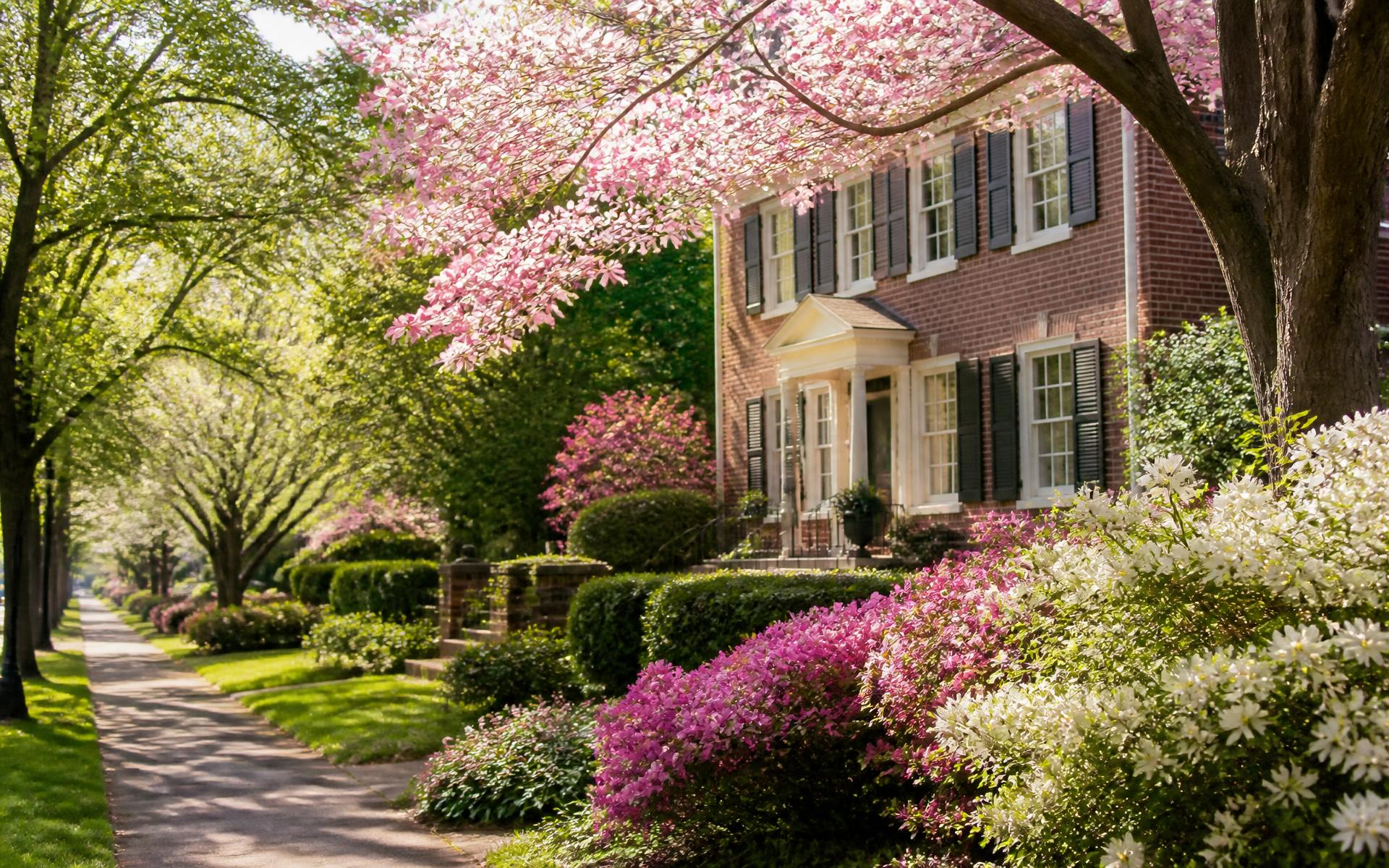
Late March through April is the neighborhood at maximum. Dogwoods, azaleas, and the willow oaks leafing out at once, and a constant low-level traffic of photographers on Queens Road West. Residents accept this as the tax on living somewhere beautiful.
Autumn & Winter
September brings Festival in the Park. October turns the canopy bronze. December brings luminaries — paper bags and candles lining sidewalks across the neighborhood on a single evening, which is the closest Myers Park comes to a collective ritual.
Questions
Frequently asked
It is heavily family-oriented, with strong school options, extensive park access, sidewalks nearly everywhere, and an unusually active neighborhood social calendar. Housing costs are correspondingly high.
Most of it, yes. The interior streets carry little through-traffic because the curved plan makes them inefficient shortcuts. The exceptions are Queens Road, Providence Road, and Selwyn Avenue, which function as arteries.
Charlotte has a humid subtropical climate: long warm springs and autumns, hot humid summers, and mild winters with occasional brief snow or ice. The canopy makes a measurable difference to summer street temperatures.
Continue reading
- Read →
Parks, Greenways & Trails
Freedom Park, Little Sugar Creek Greenway, Symphony Park, and the loops residents run every morning.
- Read →
Where to Eat Near Myers Park
The standing reservations, the neighborhood counters, and the tables worth the drive.
- Read →
Myers Park Schools
Public assignment, the independent schools, and how families actually choose between them.
- Read →
Myers Park Country Club & Clubs Nearby
The Donald Ross course, Charlotte Country Club, and how private club life works here.