Living Here
Myers Park Country Club: Golf, Membership & Club Life
A Donald Ross course opened in 1921 at the physical center of the neighborhood, and a club culture that shapes a good deal of Charlotte social life.
Reviewed · Live Myers Park editorial desk
Myers Park Country Club at a Glance
This is an independent editorial guide, not the club's website. It explains how the club works and how it fits the neighborhood, from the outside; nothing here states current club policy. Do not confuse the names: Myers Park Country Club is the private club on Roswell Avenue in Myers Park. Charlotte Country Club is a separate private club in the Plaza Midwood area, and Charles T. Myers Golf Course is a public course in northeast Charlotte.
Quick Answers
Location: Roswell Avenue off Queens Road, at the center of Myers Park, about two miles from Uptown Charlotte. Type: private, member-owned. Golf: a Donald Ross course dating from the club's founding era in the early 1920s. Joining: by member sponsorship, not open application; fees are not published. Not the same as: Charlotte Country Club in Plaza Midwood, or the public Charles T. Myers course in northeast Charlotte.
What researchers usually want to know, in order: what membership costs (not published — see below), how to join (sponsorship, detailed below), what the amenities include (golf, tennis, pool and dining), the club's history (founded 1921, Ross course), and whether living nearby requires or confers membership (neither). Each is covered in its own section further down this page.
Where the Club Sits
Myers Park Country Club occupies a large tract at the physical center of the neighborhood, on Roswell Avenue off Queens Road, roughly two miles southeast of Uptown Charlotte. The golf holes run through the low ground along the creek corridor, which is why so many of the streets on the club's perimeter — Hermitage, Cherokee, Roswell — bend rather than run straight: John Nolen's 1911 plan and the later course routing both followed the same topography. Anyone walking the neighborhood reads the club as green space long before they read it as a club.
The Donald Ross Course
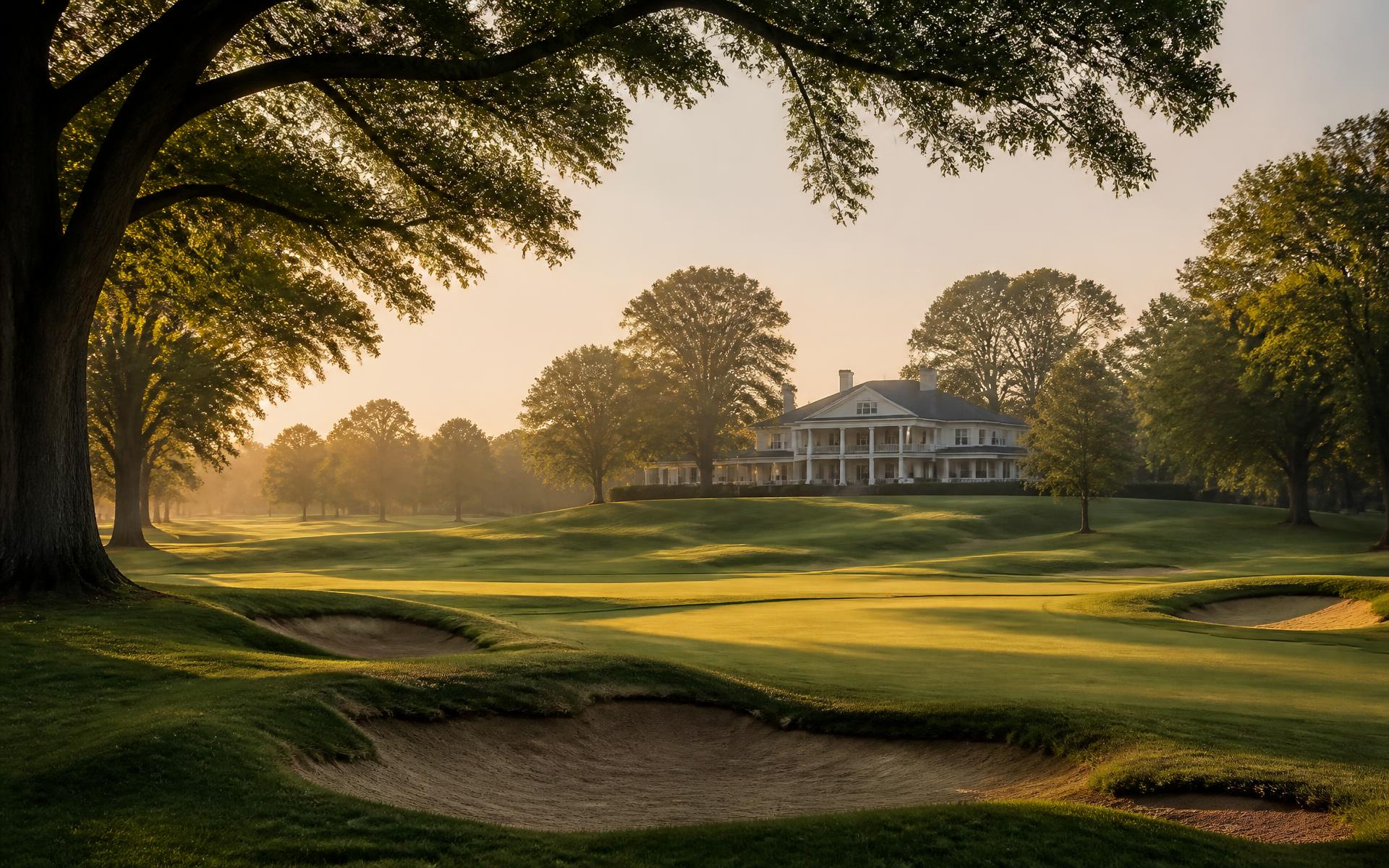
The golf course dates from the club's founding era in the early 1920s and is attributed to Donald Ross, the Scottish-born architect responsible for a long list of Carolinas courses of the same period. Ross-era design in this region is characterised by relatively modest earth-moving, greens shaped to shed water, and bunkering that punishes the approach rather than the drive. The course has been restored and updated since; for the current routing, yardage, and the details of any restoration work, the club is the only authoritative source.
What Makes a Ross Course Play Like a Ross Course
Ross courses reward placement over power, and the Myers Park routing is a textbook case. The greens are the defense: small, crowned, and sloped to reject anything not arriving from the correct side of the fairway, with run-offs that turn a near-miss into a difficult chip rather than an easy putt. The creek that shapes the neighborhood also shapes the golf — it crosses several holes, so position off the tee matters more than distance. Trees, not rough, frame most holes, and the willow oaks that line the surrounding streets continue across the course, which keeps the playing corridors honest without resorting to artificial length. Walkers do fine here; the terrain rolls but never climbs. For the current scorecard, teeing grounds, and course conditions, the club is the only reliable source.
How the Course Shaped the Neighborhood
The club and the neighborhood are the same piece of planning. John Nolen's 1911 design for Myers Park reserved the low ground along the creek as green space, and the course routing that followed in the 1920s simply formalised that decision. The result is unusual among American clubs: the fairways are not on the neighborhood's edge but threaded through its middle, so the curving crescents of Queens Road, Hermitage Road, and Cherokee Road bend around golf holes rather than around each other. The willow oak canopy that defines the neighborhood's streets continues uninterrupted across the club's boundary, which is why the course reads from the road as parkland rather than as a walled-off facility.
For property, the effect is mostly visual. Homes fronting the course borrow its open prospect and mature planting, and the streets along its perimeter are among the neighborhood's most consistently photographed. But the fairways remain private ground, and the premium a course view commands buys the view — nothing more. Buyers regularly overestimate what backing onto the course entitles them to.
The Club's History
Myers Park Country Club was founded in 1921, a decade after John Nolen's 1911 plan laid out the neighborhood around it, and the two grew up together. George Stephens' development company was building Myers Park as Charlotte's first true streetcar-era garden suburb, and a country club at its center was part of the era's formula: the course gave the new neighborhood permanent open space, and the neighborhood gave the club its membership. The original course belonged to the same wave of Donald Ross work that spread across the Carolinas in the 1910s and 1920s, when Ross and his associates were designing or consulting on courses from Pinehurst to Asheville. The clubhouse and grounds on Roswell Avenue have been renovated and expanded across the club's first century, and the course has been restored more than once — most recently in the modern era of Ross-course restorations that returned many of his Carolinas designs to their original character. For the detailed chronology, the club's own centennial materials are the authoritative record.
Facilities Beyond Golf
Like most full-service private clubs of its generation, Myers Park Country Club is not a golf-only institution. Tennis, swimming, fitness, and a clubhouse dining operation carry a substantial share of member use, and for many families with children the pool and racquet programmes matter more day to day than the course does. Junior tennis and swim teams are a fixture of Charlotte summers, and club calendars run heavily to seasonal events — junior programming in summer, holiday dining through December — which are a large part of what members are actually buying.
The clubhouse itself functions as the neighborhood's de facto dining room: member dining most evenings, private-event space for weddings and receptions, and the terrace-and-grillroom formats common to clubs of this vintage. Fitness facilities, locker rooms, and practice areas round out the operation. Specific court surfaces, pool hours, dining formats, and event capacities change with renovation cycles and are not published publicly — the club is the only current source.
A Century of Golf Course Architecture on Roswell Avenue
The grounds the club occupies are worth understanding as a piece of Charlotte's design history, not just a membership amenity. The course sits in the creek-bottom land that John Nolen deliberately left out of the 1911 street plan as unbuildable — the same low ground that carries Little Sugar Creek through the neighborhood — which is why the fairways read as a natural valley between the curving residential streets on either side. That siting is the reason so many Myers Park houses back onto fairway views without the neighborhood ever feeling like a golf development: the golf came first as landscape, and the streets were arranged around it.
Architecturally, the course belongs to the golden age of American golf design. Donald Ross spent the 1910s and 1920s building a practice that eventually touched several hundred courses, and his Charlotte-area work shared the trademarks visible here: modest length by modern standards, crowned and sloping greens that reject anything but a well-struck approach, and routing that follows the natural contours rather than bulldozing them flat. Later renovations across the decades lengthened and modernized holes, and the recent restoration wave brought back original green sizes and Ross's characteristic run-off areas. The result is a course that plays shorter than championship yardage but defends its par at the greens — the feature members and visiting players consistently remark on.
How Private Membership Works in Charlotte
Charlotte's established clubs generally admit by sponsorship rather than open application: an existing member proposes a candidate, additional members second, and the membership committee considers the file on its own schedule. Categories vary — full golf, social, junior executive, non-resident — and each carries its own initiation, dues, and waiting period. Initiation figures circulate informally in Charlotte and are frequently wrong; the club publishes nothing publicly and the numbers change. Treat any figure you read on a forum as unverified.
The practical consequence for anyone relocating: if club access is part of the reason you are considering the neighborhood, start those conversations before you buy, not after you move. Sponsorship depends on people who already know you, and building that from a standing start takes longer than a closing does.
What Membership Actually Involves
Across Charlotte's established clubs the categories follow the same broad pattern: full golf memberships with playing privileges; social memberships covering dining, pool, and tennis without golf; junior categories priced for younger members; and non-resident categories for those living outside the area. Each category carries its own initiation fee, monthly dues, food and beverage minimums, and — at the busier clubs — its own waiting list. Guest privileges, reciprocity with other clubs, and access to tee times vary by category. None of these terms is published, and all of them change, so the only reliable source is the club's membership office.
What members consistently describe as the real product is not the course but the calendar: standing dinner nights, junior swim and tennis programmes through the summer, holiday events, and the simple fact that a private club is one of the few places in Charlotte where professional and neighborhood social life overlap. Households deciding between clubs usually end up choosing on geography and on where their friends already belong, not on the golf.
The Sponsorship Process, Step by Step
At Charlotte's established clubs the sequence is broadly the same. A candidate needs a proposer — a current member in good standing who knows them personally and is willing to put their name to the file — plus a small number of seconders. The proposer typically hosts the candidate at the club first: a round, dinner, or a family visit, so the file that eventually reaches the committee is not written about a stranger. The membership committee then reviews the application on its own schedule, which can run from a few months to well over a year depending on category and capacity. An interview or cocktail-style meeting with committee members is common. Acceptance, waiting-list placement, or a polite deferral follows; a deferral usually means timing, not rejection.
For newcomers the practical question is how to find a proposer without a long Charlotte history. The honest answer is that the pipeline runs through the neighborhood itself: children's schools, church and synagogue communities, professional firms, and the parents standing on the same sidelines every Saturday. Employers transferring executives into Charlotte often have senior colleagues who belong. It is also entirely acceptable — and normal — to tell acquaintances who are members that you are interested; sponsorship offers frequently come from exactly that conversation. What does not work is cold-calling the membership office and asking for an application; that is simply not how these clubs admit.
Guests, Reciprocal Clubs, and Visiting the Course
Non-members can experience the club, but only as a member's guest. Members can typically host guests for golf, dining, and club events subject to the club's own guest policies and fees, which are not published. That makes the guest round the standard audition: candidates in the sponsorship process are usually invited as guests first, and out-of-town visitors with friends who belong will see the club the same way. There is no public tee-time access and no stay-and-play arrangement; the course is private ground.
Many established private clubs maintain reciprocal relationships with peer clubs in other cities, allowing a traveling member to request an introduction through their home club's golf professional. Whether a specific reciprocal arrangement exists, and at which clubs, changes over time and is arranged club-to-club — the correct route is always a member-to-member or pro-to-pro introduction, not a direct inquiry. For a Myers Park household that travels frequently, asking about reciprocal access is a reasonable part of comparing membership options across Charlotte's clubs.
Living Here Without Joining
There is no connection between owning a house in Myers Park and belonging to the club. The club is an independent private organisation; it levies no neighborhood assessment, holds no architectural authority over surrounding property, and many residents are not members. Streets bordering the course are ordinary public streets. The golf holes are private ground and not a public amenity, which is a common point of confusion for buyers looking at a lot backing onto them — the view is real, the access is not.
The Other Clubs Nearby
Charlotte Country Club, in Plaza Midwood, is the city's oldest and also carries a Ross pedigree. Quail Hollow Club, south of Myers Park, is the best known nationally because of its PGA Tour history. Carmel Country Club and Charlotte's other southeast-corridor clubs serve much of the same population, and a number of Myers Park households hold more than one membership — commonly a golf membership at one club and a social or downtown membership elsewhere. None of these clubs publish membership terms publicly.
Before You Rely on Any of This
Club policies, categories, fees, guest rules, and course conditions change without public announcement. Everything above describes how private clubs in this part of Charlotte generally operate; nothing here should be treated as a statement of current club policy. Confirm current information on the Myers Park Country Club website. For the neighborhood around it, continue with the history of Myers Park or the Myers Park map.
Continue reading
- Read Chapter →
Living in Myers Park
The porch culture, the greenway loop, the December luminaries — and the trade-offs residents accept.
- Read Chapter →
Things to Do In & Around Myers Park
Museums, festivals, theaters, golf, and the weekend rituals of the neighborhood.
- Read Chapter →
The History of Myers Park
From cotton farm to John Nolen's 1911 streetcar suburb, and the century of stewardship that followed.
- Read Chapter →
Moving to Myers Park
Timelines, taxes, utilities, commutes, and the practical order of operations for a relocation.