Living Here
Living in Myers Park
The porches, the greenway loop, the dogwoods in April and the luminaries in December — plus the trade-offs nobody puts in the brochure.
Reviewed · Discover Myers Park editorial desk
The daily pattern
Mornings belong to the greenway and the park loop. Afternoons belong to the school run and the sidewalks. Evenings, through most of the Carolina year, belong to front porches.
Front-porch use is a genuine and slightly startling feature of the neighborhood for people arriving from colder cities. It is a direct consequence of the plan: houses set back behind deep lawns, sidewalks along nearly every street, and a canopy that makes walking tolerable in July. See the history for why the streets were laid out this way.
Errands, honestly
Myers Park is not a fifteen-minute neighborhood in the planning sense. There is a small commercial node on Selwyn Avenue, and after that most households drive a few minutes to Park Road, Providence Road, or SouthPark. What you get in exchange is a residential street with no through-traffic. See shopping and restaurants.
Outdoors
The default loop is Freedom Park and the Little Sugar Creek Greenway; the default walk is the neighborhood itself. Charlotte's climate makes spring and autumn genuinely long, which is the practical reason so much social life happens outside. See parks and greenways and things to do.
The year
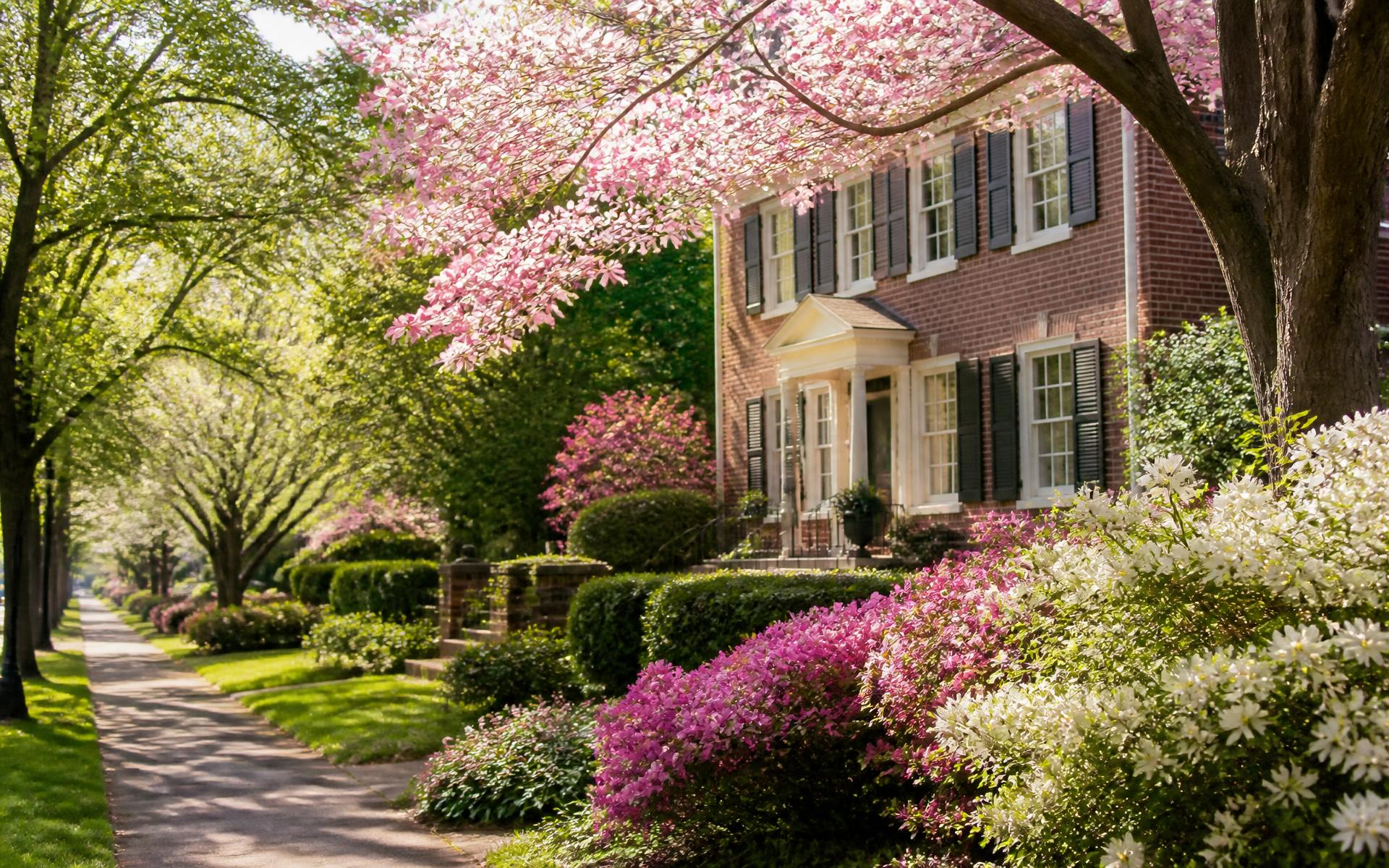
- Spring. Late March through April is the neighborhood at maximum — dogwoods, azaleas and the willow oaks leafing out at once, with a steady traffic of photographers on Queens Road West.
- Summer. Hot and humid. The canopy earns its maintenance bill.
- Autumn. The canopy turns bronze and the outdoor season extends well into November.
- Winter. Mild, with occasional brief ice. December luminaries — paper bags and candles along sidewalks on a single evening — are the closest the neighborhood comes to a collective ritual.
Families and schools
A large share of social life runs through schools and clubs. Public assignment varies by address within the neighborhood and changes over time, and several well-regarded independent schools sit within a short drive. Verify assignment for your exact address with Charlotte-Mecklenburg Schools before making decisions. Schools guide · Clubs.
The trade-offs residents accept
- Old houses cost more to maintain. Renovation reality.
- Mature trees are an amenity and an obligation. Canopy guide.
- Inventory is thin, so buying takes patience. Homes for sale.
- Errands mean driving, most days.
Planning a move? Start with moving to Myers Park, then compare the neighborhood against its peers.
Questions
Frequently asked
Residential and quiet on the interior streets, with sidewalks nearly everywhere, a mature street canopy, and daily life organised around schools, parks and a short drive to almost everything. It is excellent for recreational walking and only moderately walkable for errands.
It is heavily family-oriented, with strong public and independent school options nearby, extensive park and greenway access, and sidewalks throughout most of the neighborhood. Housing costs are correspondingly high, and school assignment must be verified by exact address with Charlotte-Mecklenburg Schools.
For recreation, yes — sidewalks run through most of the neighborhood and the Little Sugar Creek Greenway connects it toward Uptown and Freedom Park. For errands, only moderately: there is a small commercial node on Selwyn Avenue and most shopping is a short drive away.
The interior streets carry little through-traffic, because the curved 1911 plan makes them inefficient shortcuts. The exceptions are the arterials — Queens Road, Providence Road and Selwyn Avenue — which do carry volume.
Charlotte has a humid subtropical climate: long warm springs and autumns, hot humid summers, and mild winters with occasional brief snow or ice. The mature canopy makes a noticeable difference to summer street temperatures.
Continue reading
- Read →
Myers Park Schools
Public assignment, the independent schools, and how families actually choose between them.
- Read →
Parks, Greenways & Trails
Freedom Park, Little Sugar Creek Greenway, Symphony Park, and the loops residents run every morning.
- Read →
Where to Eat Near Myers Park
The standing reservations, the neighborhood counters, and the tables worth the drive.
- Read →
Moving to Myers Park
Timelines, taxes, utilities, commutes, and the practical order of operations for a relocation.